
MOIT VIETNAM | The 13th Vietnam–Lao Conference on Cooperation in Border Trade Development
/ News
The 13th Vietnam–Lao Conference on Cooperation in Border Trade Development
Participants at the Conference included H.E. Chanthanoun Soukaloun, Vice Minister of Industry and Trade of the Lao PDR; H.E. Nguyen Sinh Nhat Tan, Vice Minister of Industry and Trade of Viet Nam; H.E. Khamphao Ernthavanh, Ambassador Extraordinary and Plenipotentiary of the Lao PDR to Viet Nam; H.E. Nguyen Minh Tam, Ambassador Extraordinary and Plenipotentiary of the Socialist Republic of Viet Nam to the Lao PDR; Mr. Bui Van Khang, Deputy Secretary of the Quang Ninh Provincial Party Committee and Chairman of the Quang Ninh Provincial People’s Committee; together with representatives of functional departments and agencies under the two Ministries of Industry and Trade, as well as leaders of local authorities and departments of border provinces of both countries.
Elevating Vietnam–Lao Border Trade Cooperation to a New Level
The Vietnam–Lao Conference on Cooperation in Border Trade Development is an annual event. Building on the outcomes of previous conferences, the 13th Conference was convened to review achievements attained, identify difficulties and obstacles arising in bilateral trade and investment relations—particularly subjective causes—and to propose feasible solutions to address bottlenecks, further facilitate enterprises, goods, and means of import and export between the two countries, thereby promoting bilateral trade and investment, especially border trade, to a new level of development.
In his opening remarks, Minister Nguyen Hong Dien stated that in recent years, particularly since the 12th Conference in 2022, economic and trade cooperation between Viet Nam and the Lao PDR in general, and border trade in particular, has continued to grow strongly and achieve positive results, despite challenges stemming from global economic and political instability and the global economic downturn.
Total bilateral trade turnover since 2022 has been 1.6 times higher than in the preceding period, far exceeding the targets set by the senior leaders of the two countries. Investment by Vietnamese enterprises in Laos has shown a marked upward trend in both scale and sectors, making an important contribution to the socio-economic development of border localities, with the presence of several of the largest foreign-invested projects in Laos (after China and Thailand). Other areas of cooperation between the two countries have also recorded highly positive outcomes, which were acknowledged and highly appreciated at the early-2025 meeting between the two Politburos.
While the achieved results are highly impressive, Minister Nguyen Hong Dien noted that there remains significant room and potential for further development of bilateral trade and investment relations. The 13th Conference is therefore considered an important step toward unlocking and more effectively leveraging these substantial potentials.
The overarching objective is to formulate coordinated and feasible solutions not only to promote rapid and sustainable growth of bilateral trade and investment, but also to effectively capitalize on each side’s comparative advantages, contribute to poverty reduction, improve people’s livelihoods, build a peaceful and friendly border, and make greater contributions to the socio-economic development of each country.
Accordingly, Minister Nguyen Hong Dien called upon participants to focus their discussions on the following key issues:
First, to objectively assess achieved results, existing shortcomings, difficulties and obstacles in bilateral trade and investment relations in general, and border trade in particular, as well as their causes—especially subjective ones—in order to propose practical solutions to remove barriers and further facilitate enterprises, goods, and import–export vehicles between the two countries.
Second, the current legal framework governing bilateral trade and investment between Viet Nam and the Lao PDR is relatively comprehensive. The two sides have granted each other the highest levels of tariff preferences and trade facilitation under the Viet Nam–Lao Trade Agreement and the Viet Nam–Lao Border Trade Agreement. Nevertheless, these frameworks can still be further refined to bring greater benefits to both sides. Participants were therefore invited to put forward feasible proposals to enable the two Ministries to improve these agreements during forthcoming negotiations on amendments and supplements.
Third, in the context of rapid developments in science and technology, innovation, and digital transformation across socio-economic sectors in general and the trade sector in particular, Minister Nguyen Hong Dien raised the question of what enterprises and regulatory authorities of both sides should do to seize new opportunities arising from this transformation. He encouraged discussions on orientations and solutions to further accelerate digital transformation in trade activities and trade promotion between the two countries.
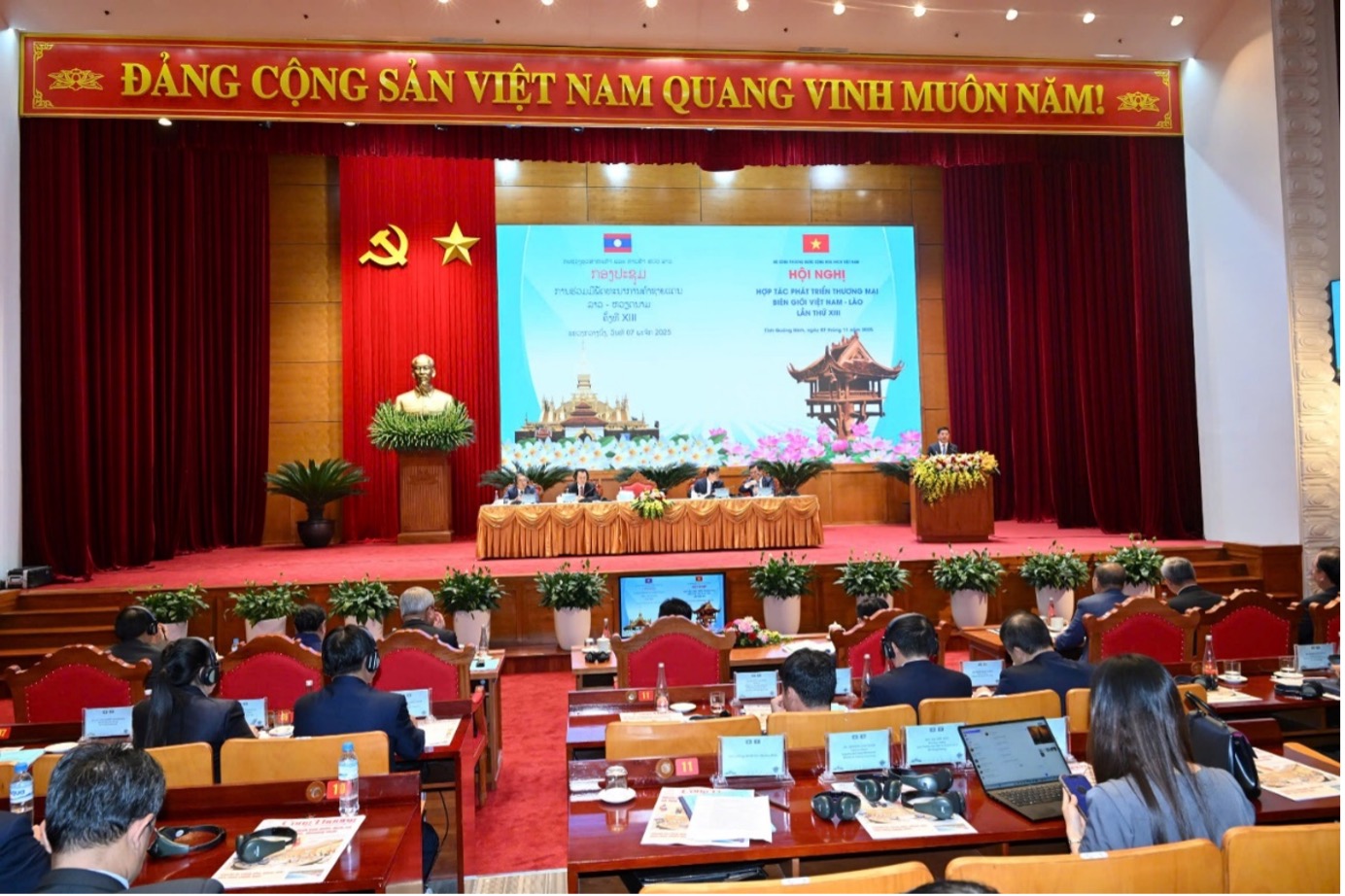
The conference
Finally, sustainable trade development requires policies that help create stable and long-term sources of goods. Minister Nguyen Hong Dien therefore proposed that the Conference discuss policies and measures to attract and strengthen investment in production and processing for export in both countries, especially in border areas, as well as policies and solutions to develop infrastructure, transport, and logistics at border gates.
“On the foundation of the great friendship, special solidarity, and comprehensive cooperation between the two Parties, States, and peoples of Viet Nam and the Lao PDR, together with the active participation of all delegates, I firmly believe that today’s Conference will serve as an important milestone, opening a new phase of cooperation that is more effective, more sustainable, and aligned with the spirit of integration, innovation, and green, digital, and inclusive development in the new era,” Minister Nguyen Hong Dien emphasized.
Also delivering opening remarks, Minister of Industry and Trade of the Lao PDR Malaythong Kommasith stressed that Vietnam–Lao border trade cooperation carries not only economic significance, but also profound political, cultural, and social value.
“This cooperation serves as a vital link of the great friendship between our two countries and as a driving force for stable and sustainable development for both nations. For Laos, border trade cooperation with Viet Nam provides opportunities to expand markets for Lao goods and access diverse and abundant sources of supply. Conversely, it also enables Vietnamese goods to penetrate more deeply into the Lao market, expand into third markets, and contribute to the socio-economic development of border areas of both countries,” Minister Malaythong Kommasith stated.
Within the framework of the Conference, representatives from departments, agencies, and functional units of the two Ministries, representatives of provincial Departments of Industry and Trade of border provinces, and enterprises from both countries engaged in discussions, dialogues, and proposals, putting forward numerous solutions to promote cooperation in trade, industry, and energy, elevating bilateral cooperation to a new level.
Five Key Orientations for Promoting Vietnam–Lao Border Trade
After more than three hours of focused and serious discussions, the Conference heard 12 statements from participating delegates. Summarizing the discussions, Minister Nguyen Hong Dien noted that there was broad consensus that, despite numerous challenges arising from global economic and political uncertainties and the global economic slowdown, with the correct, coordinated, and decisive leadership and direction of the Party and State leaders of both countries, timely and effective involvement of central ministries and local authorities, and particularly the strong efforts of the business communities of both countries, economic and trade cooperation in general, and border trade in particular, between Viet Nam and the Lao PDR has continued to achieve highly positive outcomes.
Notably, first, bilateral trade turnover increased sharply, surpassing USD 2 billion for the first time in 2024—the highest level on record—and continued to set new records in the early months of 2025, far exceeding the targets set by the senior leaders of the two countries.
Second, border market systems and border-gate economic zones have received increased investment and upgrading, facilitating trade, services, and goods exchange for border residents.
Third, trade promotion and business matching activities have been actively implemented, enabling products of each country to penetrate more deeply into each other’s markets.
Fourth, coordination among ministries, sectors, and local authorities of both countries in managing and controlling goods, vehicles, and border residents has been maintained in a closer and more effective manner.
Fifth, cooperation in other areas—such as investment, tourism, and the promotion of local currency usage—has been strengthened, making practical contributions to socio-economic development and ensuring defense and security stability in border areas.
However, alongside these achievements, cooperation in trade in general and border trade in particular still faces several limitations and challenges, including: small-scale goods exchange at border markets, mainly involving essential goods with limited large-scale commercial activities; production largely consisting of unprocessed raw materials with small scale and seasonal characteristics; the absence of concentrated production zones and integrated production–consumption chains; and border-gate infrastructure and logistics systems that, despite receiving investment attention, remain insufficiently synchronized—especially in terms of connecting transport routes to border gates—thus failing to fully meet the needs of goods circulation and exchange in border areas.
At this Conference, Minister Nguyen Hong Dien emphasized that economic cooperation between the two countries must continue to be strongly promoted in order to elevate bilateral relations to a new level and effectively realize the commitments and political determination of the senior leaders of both countries. Accordingly, the Conference agreed on six orientations for cooperation and development of Vietnam–Lao border trade in the coming period, contributing to the strengthening of the special friendship, solidarity, and comprehensive cooperation between the two countries and between their industry and trade sectors.
To ensure the effective and prompt implementation of the Conference outcomes, Minister Nguyen Hong Dien requested that functional units of the two Ministries, as well as relevant ministries, sectors, and localities of both countries, focus on the following key tasks:
First, to continue effectively implementing high-level agreements between the two Politburos, while decisively carrying out the solutions agreed upon at this Conference. Relevant ministries, sectors, and partner units of both sides were requested to study, absorb to the fullest extent, and incorporate the proposals made at the Conference into bilateral agreements as a basis for effective implementation in the coming period.
Second, to focus on reviewing, amending, supplementing, and improving mechanisms and policies on investment attraction, management, and trade development in general and border trade in particular, ensuring alignment with practical realities, compatibility with each country’s legal system, and conformity with international practices.
At the same time, to strengthen information sharing and policy consultations at all levels—from technical level to ministerial leadership and local authorities—so as to promptly address difficulties and obstacles during implementation, flexibly seek new solutions to effectively leverage each side’s potentials and advantages, promote rapid and sustainable growth of bilateral trade, contribute to socio-economic development and improved livelihoods, and build a peaceful and friendly border commensurate with the long-standing traditional friendship between the two countries.
Third, to continue studying, disseminating, and strictly and effectively implementing cooperation contents stipulated in documents signed by the two Governments—such as the Border Trade Agreement, the Viet Nam–Lao Bilateral Trade Agreement, and the Memorandum of Understanding on the Development and Connectivity of Border Trade Infrastructure—as well as cooperation in the energy sector.
Priority should be given to investment in upgrading border-gate systems and connecting transport infrastructure, inspection yards, warehouses, inspection and supervision systems, digital infrastructure, and supporting service facilities in border-gate areas, in order to attract investment, ensure safe and efficient goods circulation, and promote the development of border trade between the two countries.
Fourth, to study the application of smart border gates and digital transformation in management, continue effectively implementing trade facilitation measures, promote trade and investment activities in border areas, diversify trade forms and import–export commodities, and enhance the effectiveness of investment promotion and trade cooperation. These efforts aim to connect supply and demand between the two sides and raise bilateral trade turnover to USD 5–7 billion in the coming years, thereby contributing to rapid and sustainable economic growth of both countries.
Fifth, to strengthen effective coordination at all levels—from Governments, ministries, sectors, and local authorities to enterprises—across all fields; and to emphasize the organization of economic forums and seminars to facilitate contacts and exchanges among business communities of both countries, enabling them to explore investment and business opportunities, and contributing to building the Viet Nam–Lao border into a zone of peace, friendship, cooperation, and development.
Aligning with the views of the Vietnamese Minister of Industry and Trade, the Lao Minister of Industry and Trade emphasized that the objective of the Conference is to identify more feasible and effective measures to further develop this sector and achieve more impressive results in the coming period.
The 13th Vietnam–Lao Conference on Cooperation in Border Trade Development concluded successfully. Following the Conference, the Ministries of Industry and Trade of both countries will continue to comprehensively compile the recommendations and proposals of localities and enterprises of both sides for resolution within their respective authorities or for reporting to the Governments and Prime Ministers of the two countries for direction, with a view to promptly addressing difficulties and obstacles and facilitating faster and more sustainable development of economic and trade cooperation in general and border trade in particular.
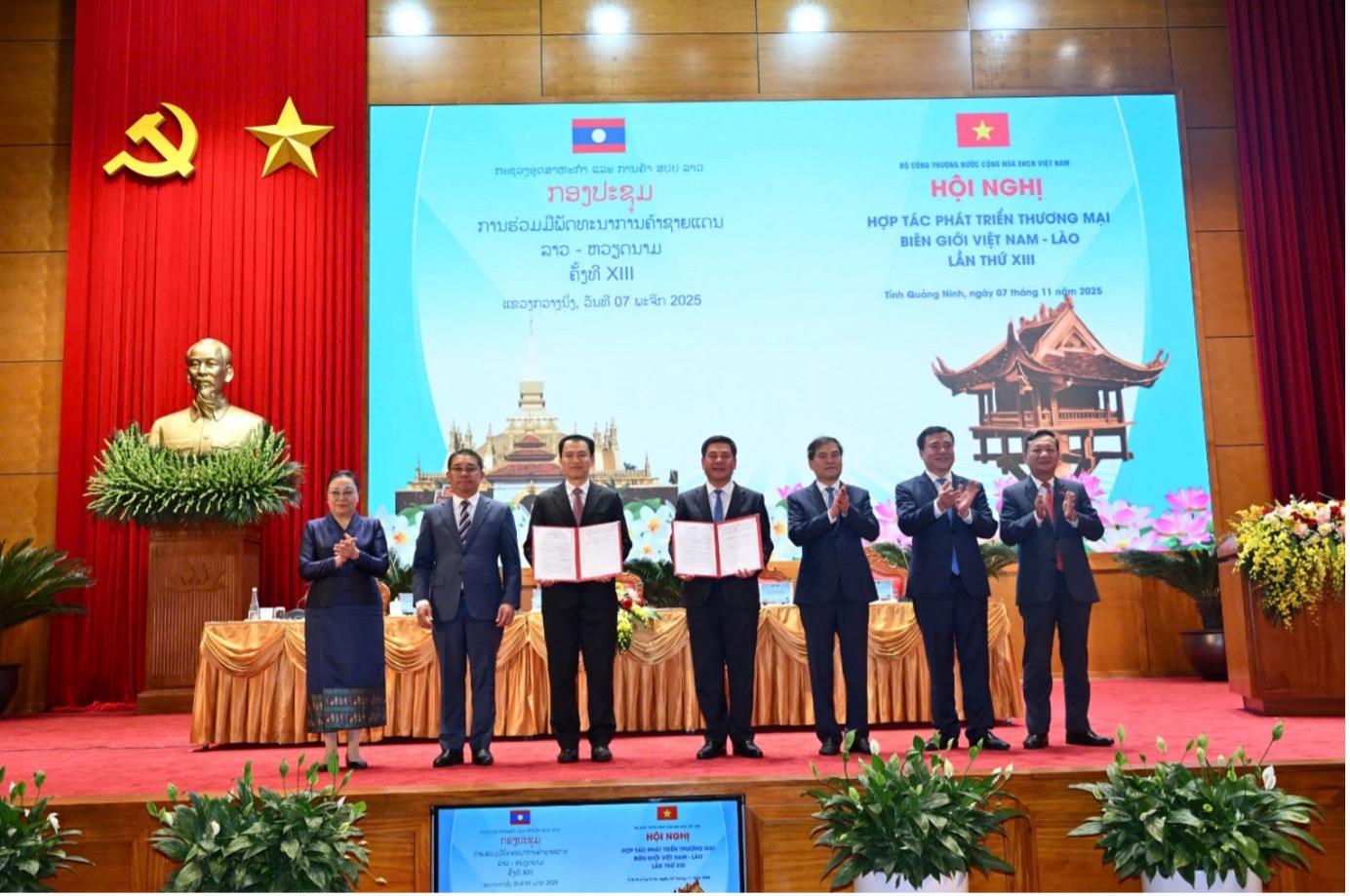
The Ceremony for the Exchange of the Minutes of the 13th Vietnam–Lao Conference on Cooperation in Border Trade Development between the Minister of Industry and Trade of Viet Nam and the Minister of Industry and Trade of the Lao PDR.
At the Conference, the Ministers of Industry and Trade of Viet Nam and the Lao PDR exchanged the Minutes of the 13th Vietnam–Lao Conference on Cooperation in Border Trade Development and witnessed the signing of memoranda of understanding between functional departments and agencies of the two sides, including: the Memorandum of Cooperation on Vietnam–Lao Import and Export Development between the Import–Export Department of Viet Nam’s Ministry of Industry and Trade and the Department of Foreign Trade of the Lao Ministry of Industry and Trade; and the Memorandum of Cooperation on Domestic Market Development between the Department of Domestic Market Management and Development of Viet Nam’s Ministry of Industry and Trade and the Department of Internal Trade of the Lao Ministry of Industry and Trade.
In addition, a ceremony was held to present Certificates of Merit from the Minister of Industry and Trade of Viet Nam to Lao organizations and individuals for their significant contributions to border trade cooperation. Likewise, the Minister of Industry and Trade of the Lao PDR presented Certificates of Merit to Vietnamese organizations and individuals in recognition of their active efforts and contributions to promoting cooperation between the two Ministries and the two countries.
Earlier the same day, Minister Nguyen Hong Dien and Minister Malaythong Kommasith conducted a site visit to the Thanh Cong Viet Hung Automobile Manufacturing Plant.
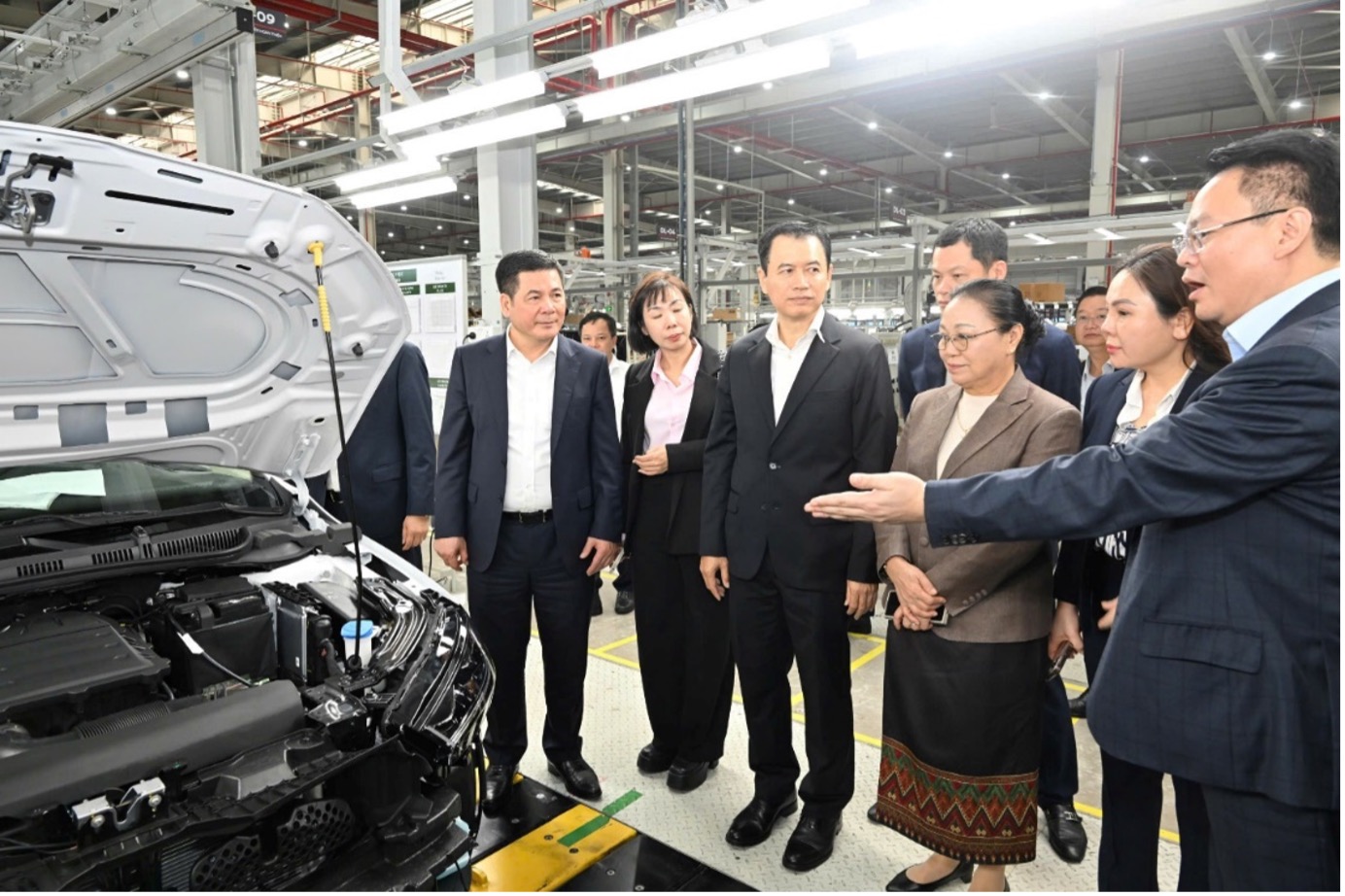 Minister of Industry and Trade of Viet Nam Nguyen Hong Dien and Minister of Industry and Trade of the Lao PDR Malaythong Kommasith conducted a site visit to the Thanh Cong Viet Hung Automobile Manufacturing Plant.
-
/ News
Vietnam-Laos Investment Cooperation: Expectations for a 10 Billion USD Breakthrough
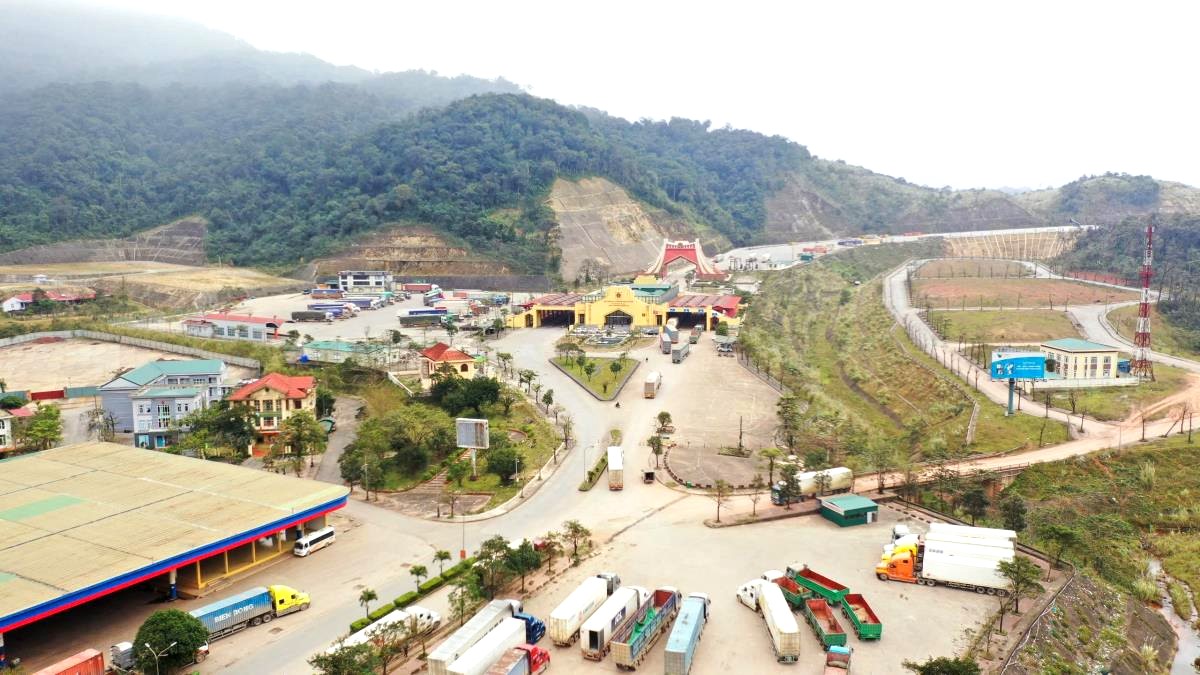
A series of major Vietnamese investment projects in Laos and the development of industrial linkage chains are expected to yield practical results, ...
-
/ News
Bringing Vietnam-Laos Cooperation into Depth, Substance, and Greater Sustainability
-
/ News
Increasing Numbers of Vietnamese Business Projects Operate Effectively, Making Positive Contributions to Lao Socio-Economic Development Across All Sectors
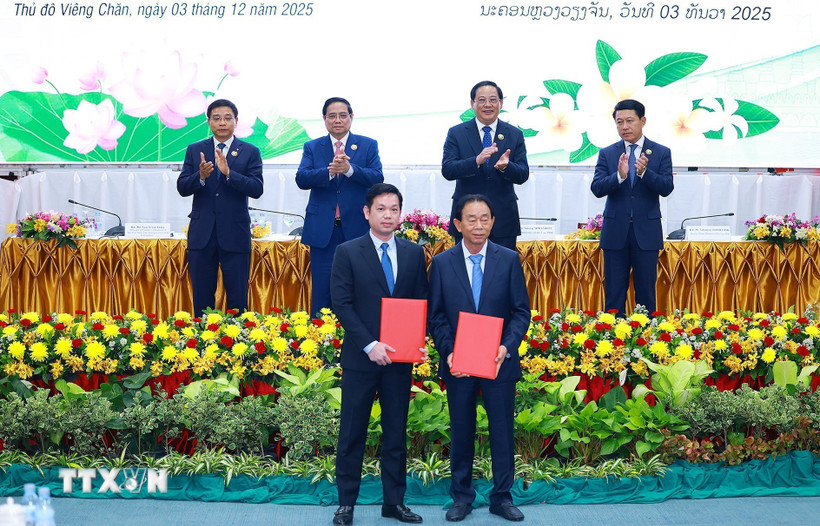
As part of the working program in Laos to co-chair the 48th Session of the Intergovernmental Committee on Vietnam-Laos Bilateral Cooperation, Prime...