
MOIT VIETNAM | Vietnam–Laos Economic Cooperation: Momentum from Border Trade
/ News
Vietnam–Laos Economic Cooperation: Momentum from Border Trade
One of the key drivers promoting economic growth between Vietnam and Laos is cross-border and border-gate trade, which has shown many positive developments.
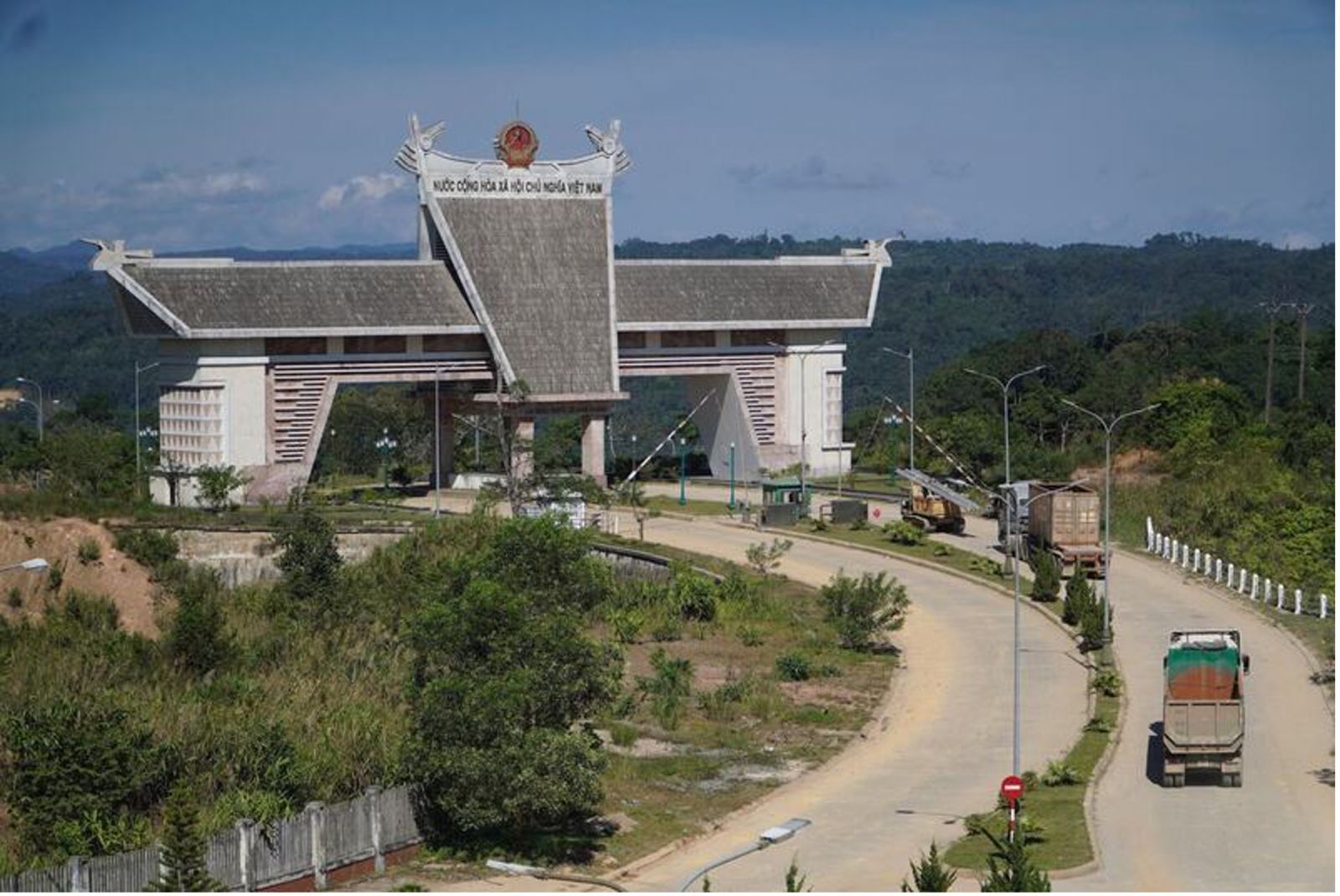
In the first nine months of 2025, bilateral trade turnover reached USD 2.36 billion, up 57% year-on-year and the highest level in the past decade.
According to information from the Import–Export Department of the Ministry of Industry and Trade, Vietnam and Laos share a common border, enjoy convenient transportation links, and have close cultural and consumption similarities.
The two countries share a border stretching more than 2,300 km, running through the administrative boundaries of many provinces and cities on both sides. This area holds great development potential and occupies a strategic position along the East–West Economic Corridor. With these advantages, together with the relationship described as “great friendship – special solidarity – comprehensive cooperation,” Vietnam and Laos have jointly built an increasingly deep and extensive foundation for economic and trade cooperation.
From 2022 to the first nine months of 2025, total bilateral import–export turnover between Laos and Vietnam reached USD 7.95 billion. Of this, Vietnam’s exports to Laos amounted to USD 2.8 billion, while Laos’ exports to Vietnam reached USD 5.1 billion. Average bilateral trade turnover stood at around USD 1.8 billion per year.
Notably, in 2024, bilateral trade turnover reached USD 2.25 billion, up 38% compared with 2023. This marked an important milestone, as bilateral trade surpassed the USD 2 billion mark for the first time and set a record high of USD 2.25 billion—the highest level ever recorded.
In the first nine months of 2025, bilateral trade turnover reached USD 2.36 billion, up 57% year-on-year and the highest level in the past ten years. During this period, Vietnam’s exports to Laos reached USD 884 million, up 79% from USD 491 million in the same period last year, while Laos’ exports to Vietnam also rose by 45%, reaching more than USD 1.47 billion.
Laos’ main export products to Vietnam include maize, ores and other minerals, wood and wood products, computers, electronic products and components, rubber, various fertilizers, and coal. Vietnam’s main export products to Laos include machinery, equipment, tools and spare parts, fruit and vegetables, textile fibers and yarns, animal feed, vehicles and spare parts.
Regarding these positive results, Hồ Đức Dũng, First Secretary of the Vietnam Trade Office in Laos, stated that bilateral relations have been strengthened through the maintenance of delegation exchanges (over 175 delegations in 2024). In the first seven months of 2025, the two sides continued to promote high-level exchanges, notably including: Prime Minister Phạm Minh Chính’s visit to Laos and co-chairing of the 47th Session of the Vietnam–Laos Intergovernmental Committee on January 9–10, 2025; State President Lương Cường’s official visit to Laos on April 24–25, 2025; and Deputy Prime Minister Nguyễn Chí Dũng’s working visit to Laos in July 2025.
Growth momentum from border trade
The Import–Export Department emphasized that one of the key drivers of economic growth between Vietnam and Laos is border trade, with a major impetus coming from the Border Trade Agreement between the Governments of Vietnam and Laos, signed in June 2025.
Over ten years of implementation, enterprises and localities in both countries have effectively utilized tariff preferences, making an important contribution to promoting economic and trade cooperation and sustainable development in the border areas.
Statistics also show that import–export activities through Vietnam–Laos border gates have maintained stable growth, with two-way trade turnover increasing from around USD 1.1 billion in 2015 to a record USD 2.25 billion in 2024—doubling after a decade of implementing the Agreement.

Import–export activities through Vietnam–Laos border gates have maintained stable growth.
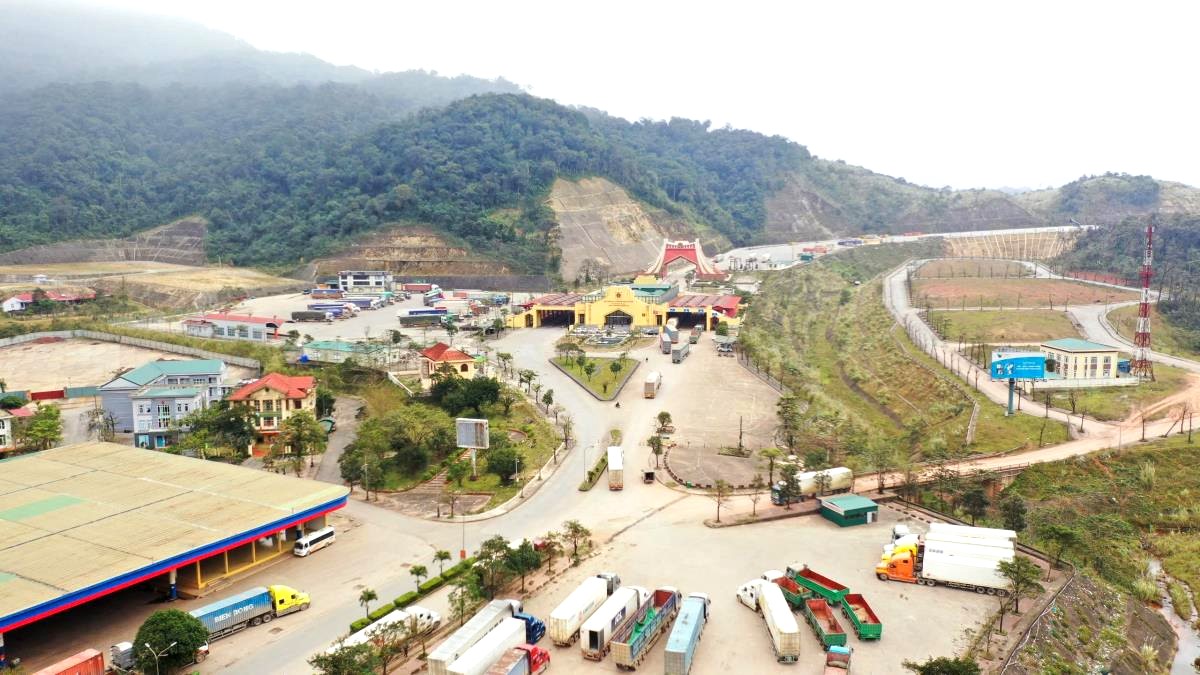
Many key border-gate pairs such as Cầu Treo (Hà Tĩnh) – Nậm Phao (Bolikhamxay), Lao Bảo (Quảng Trị) – Đen Sạ Vẳn (Savannakhet), Nam Giang (Đà Nẵng City) – Đắc Tà Oóc (Sekong), and Tây Trang (Điện Biên) – Pang Hok (Phongsaly) have become important trade hubs, making significant contributions to total bilateral trade turnover.
Moreover, through effective implementation of the Agreement, border markets and border economic zones have been prioritized for investment and upgrading, creating favorable conditions for trade, services, and goods exchange among border residents. Coordination among ministries, sectors, and localities of both countries in managing and controlling goods, vehicles, and border residents has been maintained in a closer, more synchronized, and more effective manner.
“The results of implementing Vietnam–Laos border trade during the 2015–2025 period have contributed to the substantive development of bilateral trade, job creation, and improved income and living standards for border residents, while further strengthening the great friendship, special solidarity, and comprehensive cooperation between Vietnam and Laos,” the Import–Export Department noted.
Local cooperation highlights
In practice, the Vietnam–Laos Border Trade Agreement has also promoted local economic growth in provinces sharing a common border. In Điện Biên Province, for example, import–export turnover has shown an upward trend over the years, while trade promotion activities have become increasingly clear and effective.
In recent years, Điện Biên Province has actively coordinated with Lao border provinces (Phongsaly and Luang Prabang) to upgrade border gates and crossings along the shared border. The Nậm Đích (Vietnam) – Huổi Hịa (Laos) border crossing was officially inaugurated and put into operation on May 15, 2023.
The Trade and Industry Representative Office of Điện Biên Province in Laos and the Trade, Industry, and Tourism Representative Office of Luang Prabang Province in Điện Biên have actively served as bridges connecting enterprises from both sides. These representative offices have operated effectively, acting as focal points to enhance trade promotion activities, disseminate information, promote products, and encourage enterprises to expand cross-border trade.
Similarly, Sơn La Province has established comprehensive cooperation with 9 out of 18 Lao provinces, including Houaphanh, Luang Prabang, Bokeo, Oudomxay, Phongsaly, Luang Namtha, Xayaburi, Xieng Khouang, and Xaysomboun. Sơn La continues to maintain strong friendly relations with northern Lao provinces and has carried out numerous diplomatic, exchange, and information-sharing activities in areas such as culture, economy, trade, services, and education. Several investment support and trade development cooperation activities are gradually taking shape and yielding positive results.
Through trade and service activities, social policies in border areas have been implemented more effectively, contributing to poverty reduction, economic and cultural development, and political and security stability. Relations among authorities and functional forces at border gates between Sơn La Province and Houaphanh and Luang Prabang provinces have been maintained, consolidated, and developed.
At border gates, entry–exit control has generally been maintained in an orderly manner, coordination in border-gate management has been strengthened and proven effective, and administrative procedure reform has continued to be promoted, creating favorable conditions for border trade.
Likewise, in Thanh Hóa Province, the application of preferential policies under the Vietnam–Laos Bilateral Trade Agreement and the Vietnam–Laos Border Trade Agreement has strongly promoted trade in goods and services, as well as strengthened economic connectivity between the two countries in general and between Thanh Hóa Province and Houaphanh Province in particular. As a result, import–export turnover and the number of vehicles entering and exiting have increased, while the range of traded goods has become more diverse.
Thus, from an agreement signed ten years ago that laid the legal foundation for forming a dynamic border economic area with special incentives in taxation, trade, investment, and goods transportation, the Agreement has now become an annual dialogue mechanism, playing a connecting and enabling role in shaping a dynamic and sustainable border economic space between the two countries.
To effectively implement the Agreement, Vietnam and Laos have regularly organized Vietnam–Laos border trade cooperation conferences in recent years. Over more than 60 years of nurturing the relationship of “great friendship – special solidarity – comprehensive cooperation,” Vietnam and Laos have jointly built an increasingly deep and extensive foundation for economic and trade cooperation. In particular, the Vietnam–Laos Border Trade Cooperation Conference, held periodically on a rotating basis in provinces sharing a common border, has become an important dialogue mechanism for jointly reviewing issues, resolving obstacles, promoting trade, and creating new economic corridors.
-
/ News
Vietnam-Laos Investment Cooperation: Expectations for a 10 Billion USD Breakthrough
A series of major Vietnamese investment projects in Laos and the development of industrial linkage chains are expected to yield practical results, ...
-
/ News
Bringing Vietnam-Laos Cooperation into Depth, Substance, and Greater Sustainability
-
/ News
Increasing Numbers of Vietnamese Business Projects Operate Effectively, Making Positive Contributions to Lao Socio-Economic Development Across All Sectors
As part of the working program in Laos to co-chair the 48th Session of the Intergovernmental Committee on Vietnam-Laos Bilateral Cooperation, Prime...